
Advertisement
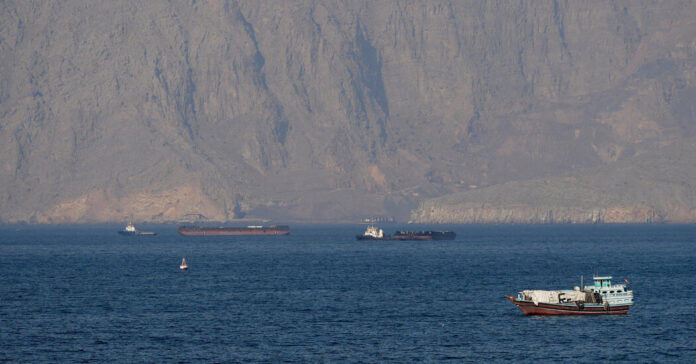
An exchange of fire threatened to shatter a fragile cease-fire as President Trump seeks to break Iran’s effective blockade of the waterway.

Adm. Brad Cooper, the head of the military’s Central Command, said on Monday that U.S. warships shot down cruise missiles and drones that Iran fired at the ships and commercial vessels the Navy was guiding through the Strait of Hormuz.
Army Apache helicopter gunships also sank six Iranian military speedboats that threatened the vessels, he said, adding that none of the Navy ships or commercial tankers were damaged.
The exchange of fire threatened to shatter a fragile three-week cease-fire as President Trump seeks to break Iran’s effective blockade of the strait by ordering American military forces to help stranded vessels exit the waterway.
As part of the new naval operation, Admiral Cooper said that multiple Navy destroyers had steamed through the strait into the Arabian Sea, in an apparent effort to encourage hundreds of marooned commercial vessels to leave the strait by way of a sea lane the Navy has cleared of mines using naval robots.
So far, only two U.S.-flagged merchant vessels have done so, though the admiral said that other commercial vessels were “en route” to transit the strait.
“We’ve now opened a passage through the Strait of Hormuz to allow for the free flow of commerce to proceed,” Admiral Cooper said on a conference call with reporters in which he called out Iran’s Islamic Revolutionary Guards Corps. “U.S. forces are helping the international community in restoring the flow of global commerce, where the I.R.G.C. on the other hand is doing everything it can to terrorize and threaten commercial shipping.”
Admiral Cooper repeatedly sought to cast the mission as “a defensive operation” backed up by dozens of warplanes, attack drones, two aircraft carriers and several warships, and 15,000 troops. But he declined to say how the command will determine which commercial ships to guide.
Mr. Trump said on Sunday that the United States would “guide” commercial vessels through the strait. But he provided few details on how the program would work.
The admiral said that in the 12 hours after Mr. Trump’s announcement of the impending operation, the command had reached out to dozens of ships and shipping companies to encourage them to use the protection of an American military umbrella — but not specifically naval escorts — to defy Iran’s blockade of the strait.
But other reports from the region on Monday could put a damper on any enthusiasm to run the Iranian gauntlet. A South Korean cargo ship caught fire after an explosion in the strait. And a major fire broke out in an oil industry port in Fujairah, an Emirati port in the southern end of the strait, caused by what the authorities there said was an Iranian drone attack.
Eric Schmitt is a national security correspondent for The Times. He has reported on U.S. military affairs and counterterrorism for more than three decades. Contact him securely on Signal: ericschmitt.36.
Related Content
Advertisement