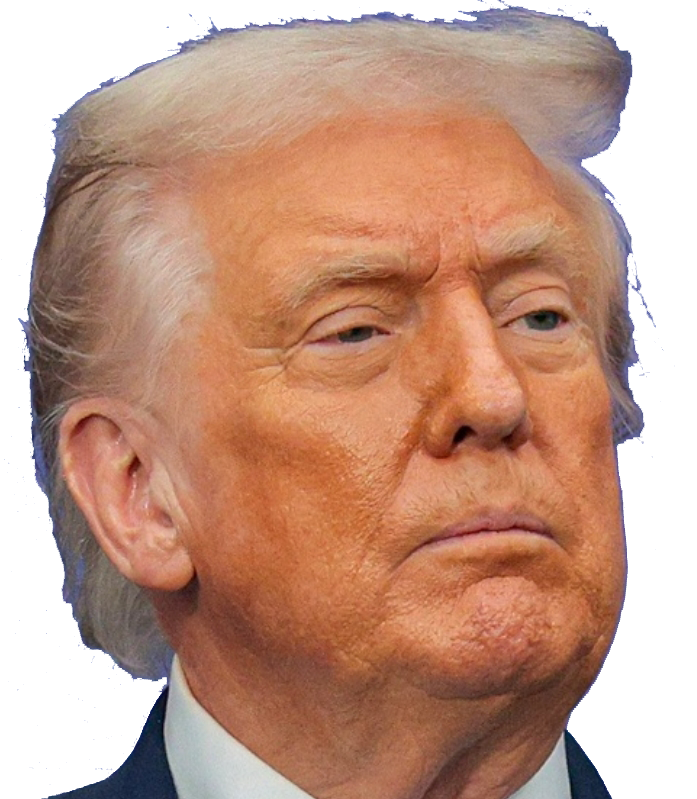



The decision could clear the way for Trump’s nominee to replace Powell as Fed chair.
Image
The Justice Department, in a stunning reversal, announced on Friday that it was dropping its criminal investigation into the Federal Reserve and its chair, Jerome H. Powell. The decision could clear the path for Kevin M. Warsh, President Trump’s pick to lead the central bank, to win confirmation.
The decision came just two days after Jeanine Pirro, the U.S. attorney for the District of Columbia, vowed to continue the investigation despite a federal judge dealing the inquiry a crippling blow in court last month.The move reflected the reality that Mr. Trump, who has spent years trying to get rid of Mr. Powell and browbeating him to lower interest rates, would not be able to install his choice for the job while the inquiry continued.
Mr. Trump had been defiant in the days before prosecutors dropped the investigation, which focused on whether Mr. Powell lied to Congress about costly renovations of the Fed’s headquarters. The president has continually blasted — and inflated — the price of the $2.5 billion project, saying earlier this week that he had to “find out how this can happen.”
Even after the prosecutors halted their work, the Trump administration still sought to frame the inquiry as ongoing. Karoline Leavitt, the White House press secretary, pointed to an independent review underway by the Fed’s inspector general.
“The investigation still continues, it’s just under a different authority,” she told reporters.
Ms. Pirro insisted on Friday that she would “not hesitate to restart a criminal investigation should the facts warrant doing so,” creating some doubt about whether Mr. Powell and the Fed will come under scrutiny again.
Mr. Trump has repeatedly pushed prosecutors across the country to investigate his adversaries even in the face of scant evidence or legal justification. While Ms. Pirro’s decision to shelve the inquiry into Mr. Powell was a retreat, it also reflected Mr. Trump’s willingness to use the criminal justice system as a tool to achieve political outcomes — in this case, his desire to have Mr. Warsh confirmed quickly.
The Powell investigation had been a roadblock to what would otherwise have been a smooth confirmation along party lines for Mr. Warsh. A top Republican on the Senate Banking Committee, Thom Tillis of North Carolina, vowed to block any of Mr. Trump’s nominees until the legal threats against Mr. Powell were dropped.
Earlier this week, Mr. Tillis posted on social media that while Mr. Warsh was a “great nominee” to be Fed chair, he would only vote to confirm him “once the DOJ drops their bogus investigation into Chairman Powell that threatens the independence of the Fed.”
By Friday afternoon, Mr. Tillis had not yet addressed whether his concerns had been rectified.
Ms. Pirro’s inquiry focused on whether Mr. Powell lied to Congress about the Fed’s $2.5 billion renovation of its headquarters in Washington. The investigation drew a rare rebuke from the Fed chair, who framed the inquiry as part of an effort by Mr. Trump to encroach on the Fed’s independence and pressure policymakers to lower interest rates.
As part of that investigation, prosecutors issued grand jury subpoenas seeking information about the renovations and Mr. Powell’s testimony to Congress. But the subpoenas were blocked in March by James E. Boasberg, the chief judge in Federal District Court in Washington, who handles all matters in front of grand juries. In a blistering opinion, Judge Boasberg described the subpoenas as an attempt “to harass and pressure Powell either to yield to the president or to resign and make way for a Fed chair who will.”
During a closed-door hearing, prosecutors under Ms. Pirro effectively acknowledged that they had no evidence that Mr. Powell had committed any crimes but wanted to press forward with their inquiry anyway.
Just two days ago, Ms. Pirro appeared defiant, promising to appeal Judge Boasberg’s ruling quashing the subpoenas. At a news conference, she assailed the decision, saying it was unacceptable that “a judge can stand at the door of a grand jury and tell a prosecutor you’re not allowed to go in.”
In a post made Friday on her official social media account, Ms. Pirro said that the Federal Reserve’s own inspector general would now be scrutinizing the costs of the renovations and would issue a report in “short order.” But Mr. Powell had directed the Fed’s internal watchdog to look into the project last year.
The Fed’s inspector general said in a statement on Friday that its “evaluation” of the renovation was ongoing. “This assessment includes our independent analysis of the project’s substantial cost increases and overruns. We are actively working to complete our review, and look forward to making the results available to the public and Congress upon completion,” the statement said.
Many Republicans had been subtly nudging the Trump administration to drop the investigation in recent weeks, suggesting that the Senate could be better equipped to look into the renovations. That step, they argued, would ease the roadblocks to Mr. Warsh’s confirmation.
On the morning of Mr. Warsh’s confirmation hearing before the Senate Banking Committee, Senator Tim Scott, chair of the committee, argued on CNBC that Congress could even set up a “special committee” devoted to the matter. He added that the move would allow Mr. Warsh to be confirmed and, in the process, help lawmakers “have access to all the information necessary” to delve into the renovations.
If Mr. Warsh is not confirmed by May 15, Mr. Powell has said that he would stay on as chair on a temporary basis. He can technically remain a member of the Fed’s board of governors until 2028. At a news conference last month, Mr. Powell said he had “no intention of leaving the board until the investigation is well and truly over, with transparency and finality.”
Mr. Trump recently threatened to fire Mr. Powell if he did not leave the Fed when his term ends.
The president is also in the midst of trying to oust another official, Lisa D. Cook, who was appointed a governor by the Biden administration, over unsubstantiated allegations of mortgage fraud. The Supreme Court has yet to rule on the case, but in oral arguments earlier this year, the justices expressed concern about the implications for the Fed’s independence if her firing was allowed to stand.
A president can remove an official only for “cause,” which is long thought to be gross malfeasance while on the job.

Senator Tim Scott, Republican of South Carolina and chairman of the Senate Banking Committee, asked the inspector general for the Fed to brief his panel on its investigation into the central bank and its ongoing renovations at its headquarters. That matter was the subject of the federal inquiry into Jerome Powell, the Fed chair, which federal prosecutors have now dropped. Scott asked for the briefing within the next 90 days.
“As I’ve said from the beginning, the American people deserve answers about the unacceptable cost overruns at the Federal Reserve,” Scott said in a statement. “These serious concerns warrant scrutiny, and I’m pleased this matter is continuing to receive it.”
Left unaddressed was the fate of Kevin Warsh, whose nomination to lead the Fed has been held up because of the inquiry. The committee has not yet announced a date to vote on Warsh’s nomination.
When Jeanine Pirro, the U.S. attorney for the District of Columbia, announced an end to the investigation into the Fed chair Jerome Powell, she noted that the inspector general for the Fed “has been asked to scrutinize” cost overruns in a renovation of the central bank headquarters.
In a statement later Friday, the watchdog pointed to the fact that it had announced such an inquiry last July.
“In July of last year, the O.I.G. announced that it was conducting an evaluation of the board’s building renovation project,” a spokesperson said in a statement. “This assessment includes our independent analysis of the project’s substantial cost increases and overruns. We are actively working to complete our review, and look forward to making the results available to the public and Congress upon completion.”
Image

President Trump has repeatedly pushed prosecutors across the country to investigate his adversaries, even in the face of scant evidence or legal justification. While Pirro’s decision to shelve the inquiry into Powell was a retreat, it still reflected Trump’s willingness to use the criminal justice system as a tool to achieve political outcomes — in this case, his desire to have his nominee as Powell’s replacement, Kevin Warsh, confirmed quickly.
It is unclear if the decision to end the inquiry into Powell will be enough to satisfy Senator Thom Tillis, the North Carolina Republican who promised in January to hold up all Fed nominees “until the D.O.J.’s inquiry into Chairman Powell is fully and transparently resolved.”
Pirro’s post on social media explicitly said that the government could reopen the matter if conditions warranted. Tillis has not yet commented on the news.
The threat to revive the investigation seems to have perturbed Democrats, who have viewed the inquiry all along as an attempt by President Trump to intimidate Fed members and pressure them into lowering interest rates. For lawmakers, the concerns about political interference at the independent central bank are likely to persist.

The Justice Department’s move to end the inquiry into the Fed chair, Jerome Powell, reflected the political reality that President Trump, who has spent years trying to get rid of Powell and browbeating him to lower interest rates, would not be able to get his pick for the job installed while the investigation continued.


The Trump administration approves executions by firing squad for death penalty cases.
Image
The Trump administration said on Friday that it would allow firing squads and readopt lethal injection as part of a broader push to revive the death penalty.
In an accompanying report, Todd Blanche, the acting attorney general, said that decisions by President Joseph R. Biden Jr. to pull back on capital punishment “inflicted untold damage on victims of crime, and, ultimately, to the rule of law itself.”
The Justice Department, he said, had reauthorized the use of pentobarbital to execute federal inmates and would also permit additional methods of execution, like the use of firing squads.
The 48-page report added that the Bureau of Prisons should follow the example of states that had expanded their execution protocols amid fights over the legality and availability of lethal injection drugs.
“The additional manners of execution that B.O.P. should consider adopting include the firing squad, electrocution and lethal gas — each of which the Supreme Court has found to be consistent with the Eighth Amendment,” the report said, referring to the part of the Bill of Rights that bars “cruel and unusual punishment.”
Senator Richard J. Durbin, Democrat of Illinois, called the moves “a stain on our nation’s history.”
Mr. Durbin accused the Justice Department of “turning back the clock by strengthening the barbaric practice of the federal death penalty — a cruel, immoral and often discriminatory form of punishment.”
President Trump had signaled the moves on his first day in office, signing an executive order to reinstitute capital punishment in the federal prison system. During the first Trump presidency, 13 people were executed on federal death row.
In 2021, Attorney General Merrick B. Garland issued a moratorium on executions of federal inmates and halted the use of a lethal drug protocol using pentobarbital. In his final days in office, President Joseph R. Biden Jr. commuted the death sentences of 37 of the 40 convicted killers on federal death row.
The Trump administration faces one significant hurdle. Under the law, the federal government may only conduct executions in states that allow capital punishment and carry them out according to state protocols.
For years, federal executions have taken place in Indiana, which only allows for capital punishment by lethal injection.
The Justice Department, acknowledging that limitation in its report, recommends the federal government find a new location to conduct executions, in a state that allows other methods. Mississippi, the report states, allows executions by electrocution, or firing squad if lethal injection or other methods are not available.
The report called for the Bureau of Prisons to submit a report “detailing the options to relocate or expand federal death row, or to construct a second federal execution facility in a state that permits additional manners of execution.”
The firing squad has rarely been used in the United States, but has recently been authorized by several states as an alternative method if the states cannot procure lethal injection drugs. Before last year, the only firing squad executions in the country in modern times had been carried out by Utah, in 1977, 1996 and 2010, according to the Death Penalty Information Center, a research group.
But in 2025, South Carolina, which had authorized the firing squad in 2021, executed three prisoners using the method.
In its Friday announcement, the administration said it was working on a regulation intended to cut years off the federal appeals process for state death penalty cases, though ultimately the courts have final say.
The department also said it planned to issue a regulation that would impose new limits on the ability of inmates sentenced to death to seek clemency or pardons from the federal government.
The report also suggested expanding the types of crimes, and the types of criminals, eligible for the federal death penalty in order to “correct gaps and deficiencies” in the current law. Congress would have to pass any such change into law.
The administration should consider proposing legislation, the report said, that would make eligible for the death penalty “murders of law enforcement officers; murders by aliens illegally in the United States; and murders constituted or committed in the commission of hate crimes, stalking, material support, or domestic violence.”
Much of the report centered on creating a new legal and regulatory framework to preserve the availability of the drug most often used to conduct executions.
Robin M. Maher, the director of the Death Penalty Information Center, said the report seemed more focused on grievances with the Biden administration than a straightforward analysis of lethal injection protocol.
“It struck me as rather disingenuous in terms of reflecting the reality of the problems” with the use of pentobarbital in executions, Ms. Maher said.
Pentobarbital was first used in an execution in 2010, in Oklahoma, and soon became a common method by which to execute prisoners.
As with other drugs used in lethal injections, it faced legal challenges from prisoners and their lawyers, who said that it caused prisoners to suffer, but courts have allowed its use, and several states use it as their primary method. Still, some states have had trouble obtaining the drug because of pressure from medical and advocacy groups on drugmakers.
In January 2025, the Justice Department under Mr. Garland issued a memo saying that “there remains significant uncertainty about whether the use of pentobarbital as a single-drug lethal injection causes unnecessary pain and suffering.” The department wrote that federal authorities should not use the drug for executions until its effect was more clear.

An appeals court blocked Trump’s attempt to deny asylum claims at the U.S. border.
Image
One of President Trump’s key assertions of presidential power over the southern border was ruled unlawful by a federal appeals court on Friday.
In a 2-to-1 decision, the U.S. Court of Appeals for the District of Columbia upheld an earlier ruling by a district court judge that Mr. Trump had to adhere to requirements outlined in the Immigration and Nationality Act and could not categorically deny asylum claims from people crossing from Mexico into the United States.
Existing immigration law “does not allow the president to remove plaintiffs under summary removal procedures of his own making,” Judge J. Michelle Childs wrote for the majority. She rejected the administration’s view of the law, which would allow it to “unilaterally and heedlessly return individuals even to countries where they will most certainly face persecution.”
While the ruling does not take effect immediately, it brings the administration one step closer to a requirement that it process new applications from asylum seekers. The administration now has 45 days to ask for the case to be reheard by the full appellate court. It could also appeal directly to the Supreme Court, which is already considering a separate case over whether asylum seekers can be turned back at the border before they have a chance to file an asylum claim.
Mr. Trump’s attempt to enact a sweeping ban on asylum is rooted in a proclamation he signed the day he took office for his second term. He declared that there was an “invasion” along the southern border and invoked what he called “the inherent right and duty of the executive branch to defend our national sovereignty.”
The proclamation was followed by guidance from the Department of Homeland Security that blocked people from applying for asylum other than at a designated port of entry. Those who did show up at a port of entry faced new, stringent document requirements, including medical and criminal histories. Asylum seekers, according to the proclamation, raised “health, safety, and security concerns” of sufficient gravity to require a presidential intervention.
Much of the earlier ruling blocking the president’s order, by Judge Randolph D. Moss of the Federal District Court for the District of Columbia, had been temporarily set aside by an appeals panel in August. That meant that Mr. Trump’s proclamation had still largely been in force.
Judge Childs, an appointee of President Joseph R. Biden Jr., along with Judge Cornelia Pillard, an appointee of President Barack Obama, formed the majority. In a partial dissent, Judge Justin R. Walker, one of Mr. Trump’s first-term appointees, argued that Judge Moss, who issued the district-court ruling, lacked the authority to issue such a broad ruling.
Lee Gelernt, an A.C.L.U. attorney who argued the appeal, praised the ruling, saying the case was about “human hardship and the separation of powers” and that the judges made clear “that the president lacks the power to unilaterally override laws passed by Congress.”
The administration “will seek further review of this badly flawed decision,” the White House spokeswoman Abigail Jackson said in a statement. “We will never cease in our efforts to safeguard the American people.”

A lawsuit seeks to block the White House from allowing officials to delete some text messages.
Image
Two government watchdogs sued President Trump and the White House on Friday over internal guidance that instructed that some text messages exchanged between officials could be deleted, despite a law generally mandating the preservation of presidential records.
The watchdogs, Citizens for Responsibility and Ethics in Washington and the Freedom of the Press Foundation, also asked a federal judge to overrule a separate but related Justice Department memo, which declared unconstitutional a longstanding federal law requiring safeguarding of presidents’ records, including text messages. The White House guidance cited the memo.
Their lawsuit comes amid a torrent of accusations that the Trump administration has disregarded record-keeping and document disclosure required by law, even as the president and his officials have sought to transform the government and push the legal bounds of their power. They have displayed a particular willingness to skirt record-keeping requirements on text messages exchanged among top officials.
In their complaint, the two watchdogs said the “deficient instructions” from the White House would “result in the irreparable loss or destruction” of presidential records.
“These text messages capture the day-to-day business of the most powerful office in the country — and arguably the world,” said Lauren Harper, who advocates government transparency for the Freedom of the Press Foundation.
She added that the memo “sanctifies” the idea that the president and his White House officials “get to decide what becomes part of the American story,” which she views as “fundamentally wrong.”
Abigail Jackson, a White House spokeswoman, said the administration maintains “a rigorous records retention program.”
“President Trump is committed to preserving records from his historic administration,” she said in a statement, adding that staff members “undertake records training so they properly preserve all materials” and that the White House was retaining the program “for electronic records — emails and documents cannot be deleted from the White House system.”
On April 1, lawyers at the Justice Department asserted that the Presidential Records Act, which became law in 1978 after the Watergate scandal engulfed Richard M. Nixon’s presidency, was unconstitutional. The act “aggrandizes” Congress “at the expense of” the executive branch and presidential powers, lawyers claimed.
The law stipulates public ownership of presidential records and mandates that documents that reflect “the performance” of the president’s duties and record White House “deliberations, decisions and policies” be “preserved and maintained.”
A day after the Justice Department issued the memo, however, the White House issued internal guidance telling employees that text messages need not be preserved unless “they are the sole record of official decision-making.”
The guidance argued that texting had become “akin to speaking every day” and that preserving all of it would “create an enormous technological burden while chilling the ability of presidential advisers to provide candid advice.” It also said that “complying with” the requirements of the Presidential Records Act “would be immensely time consuming and costly.”
The lawsuit follows another legal challenge to the Justice Department memo by the American Historical Association and American Oversight, another nonprofit watchdog, which led to the disclosure of the April 2 guidance.
Jason R. Baron, a former director of litigation at the National Archives and Records Administration, which manages presidential and agency records, called the White House guidance “deeply flawed.” He said it gave employees “wide latitude in deciding whether or not to preserve records.”
He also questioned the White House claim that text message retention was burdensome, citing detailed National Archives guidance from 2023 on how federal agencies could automate the capture of officials’ text messages.
The lawsuit also lists the National Archives, which is led by a Trump appointee, as a defendant, saying that the organization gave “no indication” that it would resist Mr. Trump’s potential attempts to “assert personal ownership over presidential records.”
Mr. Trump has long shown little regard for records laws. He was known to tear up White House documents and leave them on the floor during his first term. Politico reported in 2018 that some administration officials even had to tape back together shredded documents to ensure compliance with federal laws. At the end of his first term, Mr. Trump took presidential records including classified documents to his private Florida residence, leading to his criminal indictment. (A judge later dismissed the case, and the special counsel dropped it as Mr. Trump re-entered the White House.)
In August, the Department of Homeland Security told a government watchdog that the agency “no longer has the capability” to produce copies of text messages on its immigration crackdown that were sent among its top officials. It was later revealed that the department ditched software that enabled automatic capture of officials’ text messages, citing national security concerns, and instead resorted to manual screenshots.
Ms. Harper and Mr. Baron warned that White House records, even from Mr. Trump’s first term, could never be released if the Justice Department’s assertion — that the Presidential Records Act was unconstitutional — stands.
That means accounts of internal White House deliberation on a lethal strike on an Iranian general, Mr. Trump’s reaction to impeachment proceedings and the president’s attempts to overturn the 2020 presidential election could be lost, Ms. Harper said.


A top aide to Robert F. Kennedy Jr. ran a wellness company as he worked on health policy.
Image
For most of last year, Calley Means, a top aide to Health Secretary Robert F. Kennedy Jr., was advising on changes to the American health system while running a rapidly growing wellness company poised to benefit from Trump administration health policies.
Records released to The New York Times by an ethics office at the Department of Health and Human Services show that Mr. Means held between $25 million and $50 million in stock in the company, Truemed, through November, as he continued to serve as its president. For months, Mr. Means has ignored questions from Democrats in Congress about his finances, including the extent of his stake in Truemed, and how they related to federal policy.
Truemed helps people buy products, including $10,000 saunas and radiation-blocking underwear, with health savings accounts that are not subject to federal income tax. President Trump broadened the pool of people who could use such accounts last summer when he signed a wide-ranging law allowing an estimated 10 million additional Americans to open health savings accounts.
The records The Times obtained cover a period when Mr. Means worked as a special government employee. In November he became a permanent full-time employee and, he said, divested and resigned from Truemed.
“When I was asked to serve as an S.G.E., I worked to support wins like removing food dyes and flipping the food pyramid — never touching H.S.A. policy,” Mr. Means said in a statement. “When asked to join full time, I fully divested shares from the thriving company and nonprofit I built to incentivize healthier food.”
He said that some people thought he was “crazy” to leave the thriving company he founded, but that “the decision to support the Trump administration’s efforts to reverse childhood chronic disease is the best professional decision of my life and I have no regrets.”
Kush Desai, a White House spokesman, said, “Calley Means complies with all ethics and conflict of interest requirements” and plays “no role” in policy affecting health savings accounts. Andrew Nixon, a Health Department spokesman, said Mr. Means complied “with all applicable ethics laws and regulations.”
“Mr. Means has been an invaluable asset to Secretary Kennedy and the Trump administration, advancing key priorities to improve health outcomes while strengthening nutrition and public health policy,” Mr. Nixon said in a statement.
In his special government employee role, Mr. Means was permitted to keep his stake in Truemed under ethics rules that also allowed him to bypass public reporting obligations but barred him from being involved in policymaking related to his financial interests. He was only required to file financial disclosures when he joined the Health and Human Services Department as a full-time employee in November.
Having duties as an officer and top shareholder at a health company while working on federal health policy is a problem, said Anthony Alfieri, a professor of law, public health sciences and ethics at the University of Miami.
“Dual roles create divided loyalties and create an appearance of a kind of double game for personal interests and public policy,” he said. “And that is as troubling for Americans, because it creates a sense of distrust and a sense that public officials are advancing their own interests over the interests of ordinary Americans.”
Mr. Trump has relied heavily upon on special government employees in his second term, including Elon Musk and the venture capitalist David Sacks, who both had influence over areas touching on their business interests. Such employees are expected to perform “important, but limited, services to the government” and work for no longer than 130 days. Many of them have traditionally served more narrow roles as private-sector experts on advisory boards.
In the Trump administration, those special government employees have been given broad mandates to juggle the work of running businesses while changing policies that could affect their ventures.
Mr. Means sold his stake in Truemed late in 2025 to the venture capital firms Andreessen Horowitz, which invests in a number of health and wellness companies, and Bessemer Venture Partners, according to a person familiar with the transaction. Such sales are not unusual among business owners who divest when they go into government, said Richard Painter, a former White House ethics lawyer under President George W. Bush and a professor at the University of Minnesota.
Truemed announced late last year that it had raised $34 million in venture capital funds and had tripled its year-over-year revenue growth for the previous two years. The fund-raising was completed before Mr. Trump’s inauguration, a Truemed spokesman said.
The financial disclosures also show that Mr. Means worked until November on the board of End Chronic Disease, a nonprofit that hired a lobbyist late last year to promote the HOPE Act, a bill that also proposed expanding access to tax-advantaged savings accounts for medical expenses. Mr. Means said that he had no knowledge of the lobbying and that it occurred after he resigned.
Truemed operates by enlisting online medical providers to supply customers with so-called letters of medical necessity that attest to their need for products like supplements, fitness devices and cold-plunge pools to prevent or treat medical conditions. With those letters, the company tells people, they can use health savings or flexible spending accounts to buy the items.
The accounts allow people to set aside a limited portion of their income, without paying federal income tax, for qualified medical expenses.
But the letters facilitated by Truemed sometimes misapplied medical research and contained incorrect or extraneous information, The Times found last year. The Internal Revenue Service warned in 2024 that “general health and wellness” purchases were “not considered medical expenses under the tax law.”
Truemed partnered last year with a meat company to help people buy products like ground beef and hot dogs with money from tax-favored accounts.
Mr. Means’s financial disclosure records, which he signed in September, also list a $40,000 speaking fee to be paid for appearing next month at Meatstock, a convention in Tennessee sponsored in part by ranchers and meat vendors. Mr. Means said this month that he did not and does not plan to accept the fee.
New dietary guidelines released earlier this year by the Trump administration put red meat near the top of the food pyramid. While special government employees are allowed to accept income outside of government service, Mr. Painter said meat-related income would have created an appearance of impropriety for a special employee or top adviser.
After Mr. Means divested from Truemed late last year, he was no longer bound by ethics rules walling him off from policies that could enrich the company.
In January, health savings accounts emerged as a centerpiece of President Trump’s “Great Healthcare Plan.” In an Oval Office address, Mr. Trump said his administration wanted to limit subsidies for people who buy insurance through the Affordable Care Act, furthering a policy that in his second term has left many with crippling premium increases. He called on Congress to bolster health savings accounts instead.
“I want to end this flagrant scam and put extra money straight into the health care savings account in your name,” Mr. Trump said at the time, “and you go out and buy your own health care.”
The year before, Mr. Trump’s sweeping domestic policy bill expanded eligibility for health savings accounts by allowing enrollees in certain Affordable Care Act coverage plans to qualify.
Republicans have embraced the concept of health savings accounts for decades, arguing that they would give consumers more power and bring stronger market forces to the country’s health system.
But many researchers argue that they overwhelmingly benefit affluent people, who have more to gain from diverting money into tax-privileged accounts and more money to contribute.
“Health savings accounts are effectively a tax shelter for the wealthy,” said Nicole Rapfogel, a senior policy analyst at the left-leaning Center on Budget and Policy Priorities.
In a series of podcast appearances, Mr. Means argued in favor of the accounts in the lead-up to Mr. Trump’s election in 2024. He called for steering medical spending away from federal health care programs and into the sort of tax-favored accounts that enable discounted purchases through Truemed.
“There could be actually over a trillion dollars in HSAs if people max out their contributions,” Mr. Means said on the podcast of the wellness influencer Dr. Mark Hyman in January 2024, adding: “So we should have universal H.S.A.s, unlimited caps.”

Rubio says Iran’s soccer players, but not military personnel, can attend the World Cup.
Image
Iran’s soccer team will be allowed to enter the United States to play in the World Cup this summer, but the Trump administration will deny entry to Iranians with ties to the country’s military, Secretary of State Marco Rubio said on Thursday.
The United States is co-hosting the 48-team World Cup this year with Canada and Mexico, starting June 11. The Iranian team qualified for the tournament last year but its participation was thrown into considerable doubt after the United States and Israel launched their war against Iran in February.
During an event at the White House on Thursday, Mr. Rubio and President Trump both suggested that Iranian soccer players coming to the United States for the tournament would be welcome.
“Nothing from the U.S. has told them they can’t come,” Mr. Rubio told reporters. “If they decide not to come on their own, it’s because they decided not to come.”
But Mr. Rubio said that anyone with ties to Iran’s Islamic Revolutionary Guards Corps would not be allowed in.
“What they can’t bring is a bunch of I.R.G.C. terrorists into our country and pretend that they are journalists and athletic trainers,” he said.
“We would not want to affect the athletes,” Mr. Trump quickly added.
American and Iranian officials have given mixed signals about Iran’s participation in the World Cup.
Mr. Trump said in March that he did not care if the Iranian team played in the World Cup. Later that month, he said that while Iran’s players would be welcome, it would not be appropriate for them to come to the United States “for their own life and safety.”
Iran’s sports minister said last month that the national team could not countenance taking part in the World Cup after the country’s supreme leader, Ayatollah Ali Khamenei, was killed in U.S.-Israeli strikes. This week, an Iranian government spokesman told state media that the team was preparing to play its World Cup matches in the United States.
Gianni Infantino, the head of soccer’s global governing body, FIFA, said last week that Iran was “coming for sure” to the World Cup.
“We hope that by then, of course, the situation will be a peaceful situation,” he said, speaking at a CNBC event in Washington. “As I said, that would definitely help. But Iran has to come, of course, they represent their people. They have qualified. The players want to play.”
All three of Iran’s group stage matches are in the United States — two in Los Angeles and the third in Seattle.
Mr. Trump and Mr. Rubio made their comments about the World Cup after a reporter asked what the president thought about Italy replacing Iran in the tournament. The Financial Times had reported that Paolo Zampolli, a U.S. special envoy and a close friend of the president’s, had proposed the switch to Mr. Trump and Mr. Infantino.
“I don’t think about it too much,” Mr. Trump said.
Italy’s sports minister, Andrea Abodi, and some fans have dismissed the idea.

The Pentagon fires the advocate for independence at the Stars and Stripes newspaper.
Image
In a blow to independent coverage of the military, the Pentagon has fired the ombudsman for Stars and Stripes, a newspaper that covers the U.S. armed forces and is partly funded by the Defense Department.
“Apparently the Pentagon also doesn’t want you to hear from me anymore about threats to the editorial independence of Stars and Stripes,” the ombudsman, Jacqueline Smith, wrote in a Stars and Stripes column published on Thursday. She said that the Defense Department had given no reason for her dismissal and that she had been told it was “not grievable.”
Her role as ombudsman, which she began in December 2023, was to serve as a watchdog monitoring the paper’s independence and to report concerns to Congress.
“Jacqueline Smith has been relieved of her duties as Stars and Stripes ombudsman effective immediately,” the Defense Department said in a statement.
Ms. Smith’s departure followed months of actions by the Pentagon, under Defense Secretary Pete Hegseth, to exert editorial control of the newspaper, which has been published continuously since World War II. On Jan. 15, Sean Parnell, the department’s chief spokesman, kicked off the intervention with a social media post: “We will modernize its operations, refocus its content away from woke distractions that syphon morale, and adapt it to serve a new generation of service members.”
Image
That directive blindsided the editorial leadership at Stars and Stripes — just as Ms. Smith was unprepared for the notice that she was being removed from the payroll.
“There was no communication at all,” Ms. Smith said in an interview. She said she had been raising concerns — in her column, on podcasts and to congressional committees — about the threat to the independence of Stars and Stripes posed by the Pentagon.
“I knew it was risky to speak out, but my responsibility to Stripes and the First Amendment was paramount,” Ms. Smith wrote in an email to the publication’s staff.
In a recent column, she blasted a March 9 Pentagon directive banning the use of “news stories, features, syndicated columns, comic strips and editorial cartoons from commercial news media” in Stars and Stripes.
“Pete Hegseth doesn’t want you to see cartoons in this newspaper anymore,” wrote Ms. Smith, who has more than 40 years of experience in journalism.
Stars and Stripes receives about half of its budget through the Defense Department, though staff members for decades have prided themselves on running a newspaper with editorial latitude unfettered by Pentagon leaders. “Stars and Stripes is editorially independent of interference from outside its own editorial chain-of-command,” its website says.
Ms. Smith was the 13th ombudsman for Stars and Stripes and wrote in her column that the position had stemmed from congressional concerns that military leaders tried to stifle unfavorable news about the 1980s Iran-contra affair and other controversies.
The department’s actions against Stars and Stripes are just one component of a more restrictive media policy under the direction of Mr. Hegseth. He has imposed tighter curbs on journalists’ access to the Pentagon itself, as well as restrictions on how journalists can request information from sources in the military. The New York Times filed suit in December against the restrictions, and a judge ruled twice against the department’s curbs. The Pentagon has appealed those rulings.
The troops, Ms. Smith said in the interview, “deserve to have the unfiltered news, not what the Defense Department wants them to hear.”


An Army special forces soldier used classified information to bet on Maduro’s ouster, the U.S. says.
Image
A U.S. Army special forces soldier who helped capture Nicolás Maduro of Venezuela has been charged with using classified information to bet on the mission on Polymarket, a prediction marketplace, federal authorities said on Thursday.
The soldier, Master Sgt. Gannon Ken Van Dyke, who was stationed at Fort Bragg in North Carolina, made more than $400,000 by betting on different outcomes related to Venezuela after learning of the operation, federal prosecutors and the F.B.I. said.
An indictment filed in Manhattan federal court says Sergeant Van Dyke, 38, was involved in the “planning and execution” of the seizure of Mr. Maduro and was making bets up to Jan. 2, the day before the seizure of the Venezuelan leader and his wife, Cilia Flores, from a Caracas compound.
The sergeant bet on events related to Mr. Maduro and Venezuela 13 times in all, including “bets on the timing and outcome” of the operation to remove Mr. Maduro, according to the indictment and Jay Clayton, the U.S. attorney for the Southern District of New York.

The indictment represents one of the highest-profile episodes of a U.S. government employee using classified information to make money on prediction markets — a threat to national security that has led the White House to warn its staff to avoid such insider trading. The warning came amid a surge of suspicious trading related to the war with Iran.
Companies that run prediction markets have come under increased scrutiny in recent months. The Senate and House are considering legislation to limit government officials’ use of one popular site, Kalshi, and states are also considering stronger regulations.
Acting Attorney General Todd Blanche said, “Our men and women in uniform are trusted with classified information in order to accomplish their mission as safely and effectively as possible, and are prohibited from using this highly sensitive information for personal financial gain.”
President Trump, when asked on Thursday about government employees using prediction markets, said, “The whole world unfortunately has become somewhat of a casino.”
He added, “I was never much in favor of it. I don’t like it conceptually. It is what it is. I’m not happy with any of that stuff.”
Polymarket said in a statement Thursday that it had published new rules to tighten insider trading last month. It added that when it identified a user trading on classified government information, it referred the matter to the Justice Department and cooperated with its investigation.
In the hours before American troops captured Mr. Maduro on Jan. 3, it was reported that a Polymarket user placed a $32,000 bet that Mr. Maduro would be out of power by the end of January, and profited by more than $400,000. The Polymarket statement and the amounts specified in the indictment suggest the charges announced on Thursday are related to that bet.
According to the indictment, the sergeant tried to hide his proceeds by moving them several times, first to a foreign cryptocurrency vault, then to a personal crypto account and finally to a newly created brokerage account. After news of unusual trades related to Mr. Maduro’s capture began to circulate, Sergeant Van Dyke sought to delete his Polymarket account, falsely claiming he had lost access to the email address associated with it.
The indictment charges Sergeant Van Dyke with five counts: unlawful use of confidential government information for personal gain; theft of nonpublic government information; commodities fraud; wire fraud; and engaging in a monetary transaction in property derived from specified unlawful activity.
Sergeant Van Dyke was to be presented on Thursday before a federal magistrate judge in the Eastern District of North Carolina, and was expected to be sent to Manhattan for prosecution, the office of the U.S. attorney in Manhattan said. A lawyer for the sergeant could not be identified to seek comment on his behalf.
The question of how to regulate prediction markets has become more pressing for state officials in recent months, given a sudden boom in usage. The markets are regulated by the Commodity Futures Trading Commission, and bettors are often able to circumvent state-level restrictions on more traditional gambling because of the way the bets are classified legally.
On Thursday, the commission filed suit against Sergeant Van Dyke, asking that a court bar him from future trades and order him to pay full restitution.
Sergeant Van Dyke has been an active-duty soldier since about 2008, the indictment says, adding that since 2023, he has been a master sergeant with U.S. Army Special Forces. Ten years into his service, he was given special access to classified information, signing a formal agreement in which he promised to never divulge the contents of that information. Last year, he signed a similar agreement related to military operations in the Western Hemisphere.
Image
In the fall of last year, Polymarket began offering users the ability to bet on whether certain events involving Venezuela and Mr. Maduro would or would not occur, the indictment says.
In September, Polymarket had an offering regarding the likelihood of “U.S. forces in Venezuela by” certain dates. In November, offerings included the likelihood of Mr. Maduro being “out” of or removed from power by a series of dates. In mid-December, there was an offering concerning the future likelihood of the United States invading Venezuela by Jan. 31.
On the evening of Jan. 2, the day before the Maduro capture, Sergeant Van Dyke spent thousands of dollars buying “yes” shares on “Maduro out” by Jan. 31 and “U.S. forces in Venezuela” by the same date.
The next day, just hours after the military apprehended the Venezuelan leader and transported him to the U.S.S. Iwo Jima, the indictment says, a photograph was taken and later uploaded to the sergeant’s Google account.
As the indictment describes the photo, it depicts Sergeant Van Dyke “on what appears to be the deck of a ship at sea, at sunrise wearing U.S. military fatigues, and carrying a rifle, standing alongside three other individuals wearing U.S. military fatigues.”
Chris Cameron contributed reporting.