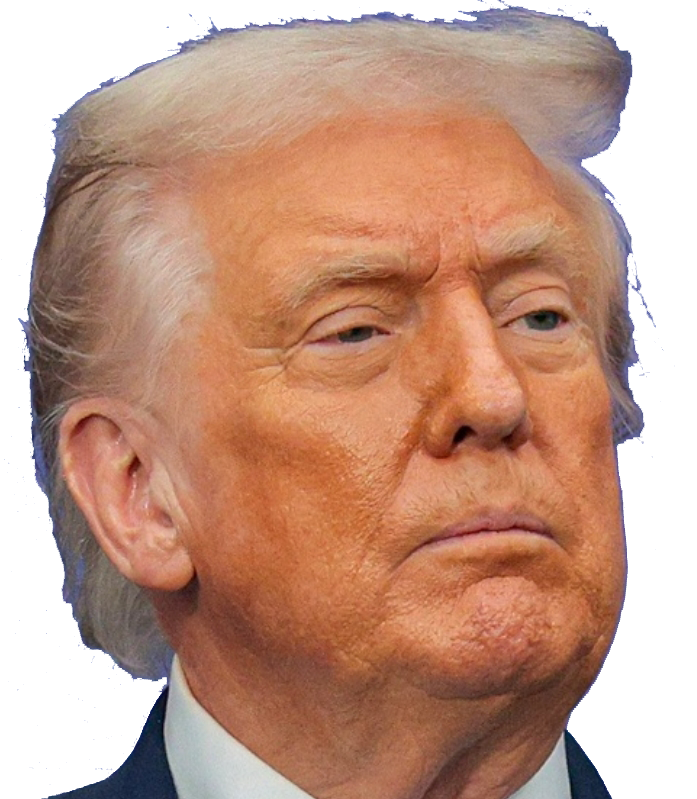


Senator Chuck Schumer, Democrat of New York and the minority leader, accused Trump of dismissing the affordability concerns of American voters. “His priorities couldn’t be clearer: higher costs for families and more power for himself,” Schumer said in a social media post.
Image

Senator Elizabeth Warren, a Democrat from Massachusetts who backed the housing bill, blasted President Trump on Friday and his refusal to sign the legislation.
“Donald Trump cares so little about bringing down YOUR housing costs that he’s refusing to sign the biggest housing bill in 30 years,” Warren wrote on social media. “The good news: it’s going to become law anyway.”
Trump’s refusal to sign the housing bill reflects his growing rift with Senate Republicans.
Image
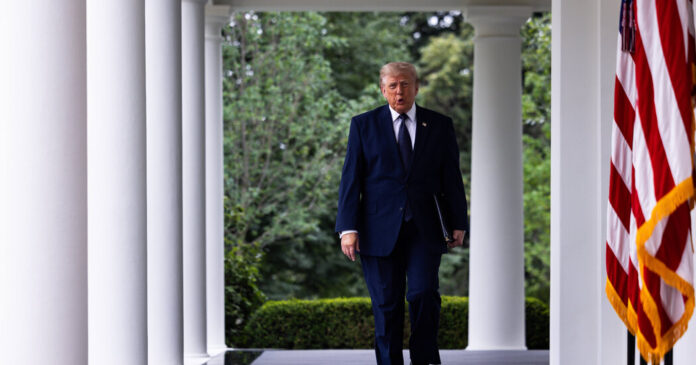
President Trump allowed a bipartisan housing bill to become law without his signature on Saturday, hours after he said he would refuse to sign it because Republicans had failed to pass an unrelated voting restriction bill that does not have enough support to clear the Senate.
“I will not sign the Housing Bill, which has been fully approved by Congress and sent to the White House, in PROTEST over the fact that the United States Senate is not capable of passing THE SAVE AMERICA ACT,” Mr. Trump wrote on social media, referring to the elections bill.
Mr. Trump’s inaction was symbolic. The measure, the first major legislative effort to address the nation’s housing crisis in more than three decades, became law at midnight after a constitutionally mandated period without the president vetoing the measure.
But Mr. Trump’s pronouncement is still a remarkable dismissal by a president of efforts by his own party to address a major political vulnerability. And it reflected the growing rift between the president and Senate Republicans over the elections bill, which contains strict voter identification requirements and a raft of other measures the president has demanded.
The housing measure adjusts a host of federal regulations to make it easier and less expensive to build housing. That approach won broad support from economists and policy experts, and the bill passed Congress last month with overwhelming bipartisan support, an increasingly rare accomplishment in a starkly polarized legislature.
The bill, known as the 21st Century ROAD to Housing Act, was poised to deliver congressional Republicans a significant victory ahead of November’s midterm elections, as they try to blunt Democrats’ attacks over rising costs.
But Mr. Trump clouded the achievement. Hours before a planned signing ceremony at the Capitol last month that he abruptly canceled, he dismissed the bill as “of minor importance” and said he would sign it only if Congress passed the voting measure.
Mr. Trump’s focus on the elections bill has already derailed Republicans’ congressional agenda. House leaders were forced to scrap votes twice last month after a group of far-right lawmakers refused to let legislation come to the floor unless the Senate took action on the voting measure.
Most Republicans back voter identification requirements, though Mr. Trump’s restrictions are far greater. The bill would require Americans to show proof of citizenship to register to vote and would severely curtail voting by mail, a popular practice in many Republican-held states and districts.
Senate Republicans, including the majority leader, Senator John Thune of South Dakota, have repeatedly said they do not have the 60 votes needed to overcome a Democratic filibuster against the bill. They have also acknowledged that there is not enough support in their caucus to overhaul the filibuster and find a way to push the bill through over Democratic opposition.
Republican leaders did not expect Mr. Trump to block the housing bill, and Speaker Mike Johnson sent it to his desk on June 29, starting a 10-day clock for the president to sign the bill, veto it or allow it to automatically become law.
Still, the president’s approach, in which the bill effectively limps across the finish line, robbed congressional Republicans of the fanfare they had sought to help make their case to voters that they were addressing affordability. Polls show that it is a top concern and that Americans increasingly blame them for economic woes.
Though Republicans are expected to trumpet the housing legislation on the campaign trail, they will do so after weeks in which Mr. Trump — who last month issued a proclamation calling the bill “comprehensive and consequential” — publicly downplayed it as a “yawn” compared with his elections measure.
Democrats have seized on Mr. Trump’s remarks to bolster their arguments that the president is unresponsive to, if not outright dismissive of, Americans’ concerns about affordability. Mr. Trump has described the issue as a “hoax” or a “con job.”
They quickly returned to the theme after Mr. Trump’s pronouncement on Friday.
“His priorities couldn’t be clearer: higher costs for families and more power for himself,” Senator Chuck Schumer, Democrat of New York and the minority leader, said in a social media post.
The bill aims to expand the housing supply to eventually drive down prices for buying a home or renting. It would relax federal regulations, including environmental reviews, to make construction faster and cheaper. It would also ease lending rules and include incentives for state and local governments to build new homes.
Though Mr. Trump at times weighs in publicly on legislative negotiations, he had been relatively hushed on the housing package. Still, the final bill included a provision intended to win support from the president: a limit on some large investors that snap up single-family homes.
That policy, something Mr. Trump tried to address in an executive order this year, proved to be one of the biggest flash points in negotiations between the House and the Senate.
Yet Mr. Trump has not discussed the provision much since the legislation passed. Instead, he has diminished its importance by arguing that the most effective way to lower housing costs would be a reduction in interest rates that could help to push down mortgage bills. The new chairman of the Federal Reserve, Kevin M. Warsh, has expressed optimism about taming inflation but has not committed to quickly lowering interest rates.
Iran War

Strait of Hormuz Will Soon Be Declared Open to All Traffic, U.S. Officials Say
Image
U.S. officials said on Friday that they expected Iran would issue in coming days a public statement acknowledging that all channels through the Strait of Hormuz are open, and that Iranian forces will cease shooting at ships passing through the narrow waterway.
The officials, who spoke to reporters on the condition that they not be identified, said that if Iran did not issue the statement and stick with it, “we’re not going to have a good outcome for them.”
In a 30-minute conversation, the officials said that Iranian negotiators had told them the drone attacks on ships passing through the strait had been conducted by rogue units of the Islamic Revolutionary Guards Corps who were trying to undermine the vague nuclear accord signed last month. But they said that the Trump administration planned to continue negotiating on the broader, permanent deal on the future of Iran’s nuclear program, and would respond militarily to any more strikes on ships.
Earlier in the day, President Trump issued a Truth Social post saying negotiations would continue, but that the cease-fire between Iran and the United States — a key element of the 14-paragraph agreement reached last month, was over.
One of the three senior American officials said that no final nuclear deal would be reached unless Iran turned over to the United States what he called the “nuclear dust,” the near bomb-grade uranium fuel that is largely buried at the Isfahan nuclear enrichment and conversion center, and that the fuel would be diluted so that it could not be used in a weapon.
But the 14-point plan left unclear who would possess that fuel, and Iranian officials have since declared that it could not leave their territory. It is also unclear whether the retrieval and dilution would be conducted by the Iranians or by the United States in partnership with the International Atomic Energy Agency, the U.N.’s nuclear inspector.
The officials did not indicate that any further talks on the broader deal were planned. To hit the 60-day deadline described in the June agreement, a final accord would have to be reached by mid-August.

Two days of U.S. strikes in Iran signal a sharp escalation.
Image
U.S. forces sharply ramped up their attacks against Iran this week, hitting more than 170 Iranian military targets on Tuesday and Wednesday, the Pentagon said. It was one of the most intense rounds of strikes since the war began more than four months ago.
Analysts said the Trump administration was sending a pointed message to the government in Tehran that the United States was willing to broaden its mission again and hit sites that have both military and civilian uses.
On Friday, President Trump said on social media that he had agreed to continue negotiating with Iran, but that “the Cease Fire is OVER!” It was unclear what his administration’s next steps might be.
The targets hit this week included air defense systems, drone and missile storage sites, and military speedboats along the southern coast of Iran near the Strait of Hormuz, a critical commercial shipping lane that has become a focus of recent fighting.
U.S. forces also appeared to hit a railway bridge in northeastern Iran more than 700 miles from the strait. Online video verified by The New York Times showed several people inspecting a crater at the site.
Current and former U.S. commanders and Pentagon officials said the strikes were a clear escalation as the United States and Iran appeared to edge closer to a return to full-scale war.
The attacks signaled that “Iran’s civilian infrastructure is vulnerable, and if Tehran continues to escalate, the U.S. military is capable, and willing, of targeting bridges and railways,” said Dana Stroul, the Pentagon’s top Middle East policy official in the Biden administration.
Mr. Trump made that point this week, saying U.S. forces could target civilian infrastructure in Iran, including electricity plants and bridges, even though that could constitute war crimes.
He repeated the threat of devastating strikes on Iran in a social media post late Friday night, this time warning that thousands of missiles would be launched if the Iranian government tried to assassinate him.
Earlier, referring to this week’s strikes, Capt. Tim Hawkins, a spokesman for Central Command, said in a phone interview that the United States struck Iranian military logistics infrastructure targets like the railway bridge that were far from the strait but that enabled Iran to flow weapons, munitions and other military supplies to the most contested area of the conflict.
The U.S. attacks killed at least 14 people and injured 78 others across five provinces, according to Iran’s Health Ministry.
Iran said it had responded by firing at U.S. military bases in Qatar, Bahrain and Kuwait. Jordan said it had also intercepted Iranian attacks.
This week’s spasm of tit-for-tat violence began after the Pentagon said Iran attacked three commercial ships, including a Saudi oil tanker and a Qatari vessel carrying liquefied natural gas. Iran has not claimed responsibility for the attacks.
Mr. Trump said on Wednesday that while the United States would probably hit Iran “hard,” he did not expect a return to all-out war. “I don’t think it’s going to start again,” he told reporters at a NATO summit in Turkey. “I think it’s going to go very quickly.”
But later in the day, he said in a social media post that if Iran attacked ships again, “it will get much worse!”
Congressional Democrats pounced on those remarks as evidence that the Trump administration has no coherent strategy to end the war.
“There has never been a true cease-fire,” Senator Jack Reed of Rhode Island, the top Democrat on the Armed Services Committee, said in a statement. “President Trump changes his mind on a daily basis, prolonging the conflict without a strategic plan to end it.”
Analysts said the skirmishes, sandwiched between negotiations, are likely to be the new normal, as both sides struggle for control of the strait.
“The Trump team calculated that the extremely generous sanctions relief in the M.O.U. would be enough of an incentive for Iran to permit free navigation through Hormuz,” said Ms. Stroul, who is now with the Washington Institute for Near East Policy. She was referring to the memorandum of understanding that the United States and Iran signed last month.
“But that’s not what has happened — the Iranians have attempted to exert control and intimidate shippers into only going through the Iran-approved route,” she added.
Conversely, Ms. Stroul said, Iran has also misjudged badly. “Members of the regime underestimated Trump, and led themselves to believe that if they escalated and caused a crisis in navigation, they could extract more financial concessions from the United States,” she said. “But that’s not what is happening.”
Iran’s retaliatory strikes have not appeared to have caused major damage. Iran’s military said on Thursday that it had targeted Muwaffaq Salti Air Base — a Jordanian base also used by U.S. forces — with ballistic missiles. Jordan’s military said in a statement that it had intercepted eight missiles in its airspace and that they had not caused material damage.
Kuwait said that it had intercepted three ballistic missiles, a cruise missile and 10 drones early Thursday morning and that falling debris had injured one person and caused material damage. Bahrain’s military said it had intercepted and destroyed several drones and missiles after Iran launched attacks on Thursday.
Iran also said it had launched an attack in Qatar, a key mediator in Iran’s talks with the United States. The Qatari authorities did not confirm any strikes but issued a public security alert that it later lifted.
Reporting was contributed by Yeganeh Torbati, James McManagan, Ismaeel Naar, Euan Ward, Leily Nikounazar and Qasim Nauman.

President Trump said in a social media post on Friday that he had agreed to continue negotiating with Iran, but that the cease-fire remained broken, indicating that hostilities could continue.
“The Islamic Republic of Iran has asked us to continue ‘talks,’” Trump wrote. “We have agreed to do so, but the United States has stated to them, in no uncertain terms, that the Cease Fire is OVER!”


Mideast mediators try to de-escalate the U.S.-Iran crisis.
Image
Regional mediators were rushing on Friday to pull the United States and Iran back from the brink of renewed war, as days of strikes by the two countries appeared to settle into an uneasy pause.
Qatar, which helped broker the U.S.-Iran truce last month, has been in talks with Washington and Tehran to de-escalate the crisis, according to three officials with knowledge of the matter, who requested anonymity to discuss sensitive diplomacy. Two of them said on Friday that a Qatari delegation was in Iran as part of those efforts.
In recent days, several countries in the region — including Bahrain, Kuwait and Jordan, all of which host U.S. military facilities — said they had come under Iranian attack.
President Trump said on Friday that Iran had asked the United States to continue talks and that Washington had agreed. And yet, writing on social media, he said that the United States had also told Tehran “in no uncertain terms” that the cease-fire was “OVER,” echoing remarks he made earlier this week and raising the prospect that negotiations could continue even as fighting persists.
There was no immediate response by Iranian officials. The recent strikes have all but shattered the truce and followed a now familiar pattern of hostilities: attacks blamed on Iran against commercial ships in the Strait of Hormuz, followed by American retaliation, Iranian counterattacks and then a return to fragile stalemate.
Even as the fighting appeared to subside on Friday, it remained unclear whether the latest mediation efforts could prevent that cycle from repeating. It has become a dangerous test of wills, with each side trying to show that it can absorb the other’s attacks and respond forcefully, without tipping the conflict back into full-scale war.
Tehran has threatened in recent days to expand its attacks to other U.S. military facilities in the region if American attacks continue. Iran accused U.S. forces of striking railway lines this week in the country’s north, and Mohammad Bagher Zolghadr, secretary of the Supreme National Security Council, warned on Friday that “attacks on infrastructure will be met with reciprocal action.”
There were scattered reports overnight from Iranian state media of explosions in southern Iran, but the reports were at times contradictory and often followed by denials. U.S. Central Command, which oversees American military operations in the Middle East, had made no announcement of new strikes by Friday morning.
The confusion reflected how much of the region remained on edge, with even fragmentary reports of explosions enough to raise fears that the latest cycle of strikes could widen again.
At the center of the crisis is the Strait of Hormuz, one of the world’s most important energy corridors. The United States has accused Iran of targeting commercial vessels in the waterway, while Tehran has insisted that marine traffic adhere to a designated route through Iran’s territorial waters. The dispute has turned partly on the wording of the truce, which called on Iran to help arrange safe commercial passage through the strait, while leaving unclear exactly how.
The U.S. military said on Thursday that it had struck more than 170 targets in Iran during the previous 48 hours, a significant increase compared with earlier flare-ups during the cease-fire. The strikes were focused on military targets on the Iranian coast and were intended to degrade Iran’s ability to threaten commercial shipping in the strait, the military said.
The two days of attacks — which came during funeral ceremonies for Ayatollah Ali Khamenei, the supreme leader killed in U.S.-Israeli strikes on Feb. 28 — killed 14 people and injured 78 others, according to Iran’s health ministry, which did not give details about the victims.
Leily Nikounazar contributed reporting.
More Administration News

Erica L. Green and Dustin Volz
Erica L. Green covers the White House. Dustin Volz covers cybersecurity and intelligence. They reported from Washington.
Firings and a resignation render an independent election group useless.
Image
The Trump administration has forced out the three remaining members of an independent, bipartisan commission that supports states in administering their elections, the White House confirmed on Thursday. The move comes as President Trump seeks to cast doubt on the outcome of the upcoming midterms and impose control over how ballots are counted.
Mr. Trump terminated, effective immediately, Thomas Hicks and Benjamin Hovland, two members selected by congressional Democrats to serve on the Election Assistance Commission, and accepted the resignation of a Republican member, Christy McCormick.
The board has no other remaining members, as its fourth commissioner resigned this spring.
An unidentified White House official said in a statement that Mr. Trump reserved the right to remove individuals who “may not be totally aligned with the important task of securing America’s elections and ensuring every legal vote is counted.” The White House official cast the dismissals as part of the federal government’s strategy to work across agencies to safeguard elections from fraud and abuse.
The official pointed to the recent decision in which the Supreme Court ruled that Mr. Trump had the authority to fire most independent regulators for any reason, ushering in a vast expansion of presidential power. Mr. Trump had hailed the decision as “the Greatest Increase in Presidential Power in the last 100 years,” and said it came down “at such an important time!”
The two Democratic members who were fired received their termination letters via an email from Morgan Dewitt Snow, whose signature identified her as the deputy director of presidential personnel.
“On behalf of President Donald J. Trump,” read the email, which was obtained by The New York Times, “I’m writing to inform you that your position as commissioner of the Election Assistance Commission is terminated effective immediately. Thank you for your service.”
Mr. Trump has been laying the groundwork for months to assert that Republicans would face a tough midterm election, not because of the broadly unpopular war in Iran and plummeting approval ratings on the economy, but because of a baseless claim that the country’s election system is fraudulent.
On Friday, Mr. Trump refused to sign significant housing legislation, a decision he framed as a protest against Senate Republicans for failing to pass a voting restriction bill. The president has ramped up his efforts to pressure Republicans to pass the voting bill, called the SAVE America Act, after he faced pushback from his party this year when he issued an alarming call for Republicans to “nationalize” voting and take over election administration from states.
Mr. Trump, who has falsely claimed that the election he lost in 2020 was “rigged,” has been pushing legislation that would impose stringent voter identification requirements. He has called for significantly curtailing the use of mail-in ballots, which he has claimed without evidence that Democrats have used to cheat. (Mr. Trump voted by mail in a special election in Florida in March.)
The Election Assistance Commission was established by Congress in 2002 after the Florida recount episode that marred the 2000 presidential election. It is generally viewed by election administrators as an important federal ally and a guardrail for ensuring smooth elections across the country, though for years it has drawn criticism from some Republicans who viewed it as an unnecessary federal entity.
According to its website, the commission guides states in ensuring they meet voting requirements, oversees testing and certification of voting systems and disperses funding to help states meet requirements. It serves as a national clearinghouse for information on election administration and maintains the national mail voter registration form established by the National Voter Registration Act of 1993.
After Russia’s election interference efforts during the 2016 presidential campaign, the commission sharpened its focus on cybersecurity issues, supporting states alongside the Cybersecurity and Infrastructure Security Agency as they reviewed and improved safeguards on their voting machines. Mr. Trump in his second term has overseen major cuts at the cybersecurity agency, which has not had a Senate-confirmed director since he returned to the White House. Now, after the ousters at the election commission, the two primary points of contact for state and local elections officials are leaderless.
In an interview, Mr. Hovland said he had been traveling for his job and preparing for a semiannual gathering of top state election officials next week in Rapid City, S.D., when he learned on Thursday afternoon that he had been fired. He said the decision “was not unexpected” after the Supreme Court last week gave the president broad power to fire independent government regulators.
Mr. Hovland said the staff at the commission, which currently hovers around 60 people, was expected to continue its work supporting election officials. The small agency, which was given an annual budget this year of about $24 million by Congress, focuses on the unglamorous but important work of elections administration, he said.
“It is harder than it has ever been to run elections. Resources are stretched incredibly thin,” Mr. Hovland said. “We were out there to try to help those folks and be a source of best practices.”
Last year, Mr. Trump issued an executive order that calls on the Election Assistance Commission to require people to show government-issued proof of U.S. citizenship to register to vote in federal elections and directs state or local officials to record and verify the information. It also seeks to require states to count ballots by Election Day. A judge permanently blocked the order, saying the president exceeded his authority.
Michael Waldman, the president and chief executive of the Brennan Center for Justice at the New York University School of Law, in a statement called the terminations “deeply concerning in light of President Trump’s relentless efforts to try to interfere in elections.”
The removals also drew fierce condemnation from Democrats.
In a joint statement, Senator Alex Padilla, Democrat of California and a top member of the Senate Rules Committee, which has jurisdiction over federal elections, and Representative Joe Morelle, Democrat of New York, called the firings “illegal” and politically motivated.
“Trump continues to double down on his efforts to erode trust in our elections, undermine independent oversight and further his administration’s attempt to ‘take over’ elections,” the statement said. “Americans deserve elections that are safe, secure and run free from political interference — not overseen by partisan loyalists and election deniers beholden to Trump.”

Florida’s Palm Beach International Airport is renamed for Trump.
Image
Palm Beach International Airport in Florida is now President Donald J. Trump International Airport.
The name change became official on Thursday morning, the Federal Aviation Administration announced. Eric Trump, Mr. Trump’s son and the executive vice president of the Trump Organization, shared a video on social media in which an air traffic controller is heard announcing the name change to the pilots of the president’s private Boeing 757 as it approached the airport for a landing just after 5 a.m.
“As a son, and someone who flies out of this airport nearly every day, I will forever be proud to see the initials ‘DJT’ on my boarding pass,” Eric Trump wrote in a separate post.
The airport’s three-letter code will not change to DJT from PBI until Aug. 18, according to airport officials.
Travelers will see the airport’s previous branding and new signage during a transition period that will last several weeks, airport officials said. The rollout of the new name would not disrupt airport operations, they said.
“We’re working behind the scenes to update our physical signage, terminal spaces, and digital channels to our new name: President Donald J. Trump International Airport,” the airport said on social media.
The airport sits a few miles from Mar-a-Lago, Mr. Trump’s private club and residence in Palm Beach, which has served as a hub for his political operations.
Gov. Ron DeSantis of Florida, a Republican, signed a bill in March clearing the path for the airport to be renamed. Democratic state lawmakers opposed the measure, which the Legislature approved in February, arguing that it would cost about $5 million to update signs, maps and other airport materials to reflect the name change.
The New York Times reported in February that Mr. Trump’s family business had filed trademark applications for potential airport names with the United States Patent and Trademark Office. The applications staked a claim to three names: President Donald J. Trump International Airport, Donald J. Trump International Airport and the airport code DJT.
The applications also sought the right to use the name in connection with a variety of airport-themed merchandise, including luggage, animal carriers and “shoes for protection of airline passengers’ feet during airport security screening.”
Renaming the airport for Mr. Trump attaches his name to a gateway that is used by millions of visitors each year.
“The Area is HOT, the Location is GREAT, and the Renovation will be SPECTACULAR,” Mr. Trump wrote in a social media post on Thursday evening, adding that the airport will soon be one of the “Greatest and Most Spectacular Airports anywhere in the World!”
Mr. Trump has a long history of putting his name on the things he has built, owns or promotes, a list that includes Trump Tower and his golf resorts and hotels. As president, he has reached beyond his private businesses. For nearly six months starting in December, Mr. Trump’s name was added to facade of the John F. Kennedy Center for the Performing Arts in Washington until a judge ordered its removal in May. His signature is expected to appear on U.S. dollars later this year.