
International law matters when it comes to something as significant as a widescale military assault on a territory of another state, resulting in the death of its political and religious leader.
The 1945 United Nations charter was written at the end of the second world war to place significant constraints around precisely that type of conduct, and yet 80 years later there is a clear sense that we are living in a world in which “might is right”.
This is especially so when the significant military capability of the US and Israel is unleashed without any reference to accepted international norms.
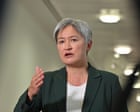
Australia has been supportive of efforts to constrain Iran’s nuclear ambitions and has made clear it will not mourn the death of Khamenei. Foreign affairs minister Penny Wong’s statement that “I’ll leave it for the United States and Israel to speak of the basis, the legal basis for the attacks” was cautious and suggested Australia was fence-sitting. On one level this may seem reasonable as the onus clearly rests with the US and Israel to justify conduct which is a serious violation of the UN charter and an act of aggression. However, how other states react in situations like this matters, because silence or refusal to make a formal and clear statement can be interpreted as complicity.
Australia has consistently sought to uphold and support the UN charter since its adoption and has a strong record of having done so. We are now at odds with that.
The Albanese government consistently references its support for various forms of international law, especially in the context of its interactions with China in the South China Sea and regionally. International law cannot be cherry-picked. It requires consistent adherence, otherwise compliance will over time erode.
While there are several possible legal arguments that could be advanced to generally justify this type of military operation, none have merit in this instance. While the UN charter sought to place constraints on the use of military force and remove it from part of the everyday conduct of international relations that predated the second world war, it was made clear that the charter was not a “suicide pact”.
Two legal arguments are traditionally advanced to use military force. The first is when the UN security council has authorised the use of force. There are very limited examples of where this has occurred, with the 1991 Gulf War in which the US-led “Coalition of the Willing” acting under Security Council Resolution 678 expelled Iraqi forces from Kuwait after its annexation by Saddam Hussein the clearest example. In this instance, no such security council resolution authorising any use of force by any UN member against Iran has been adopted.
The other exception is self-defence, which the charter recognises following an armed attack by one state against another. While Iran has certainly been responsible for previous armed clashes with Israel and the United States, even taking into account the 2025 “Twelve Day War” there has been no recent incident that meets the threshold for either Israel or the US acting in self-defence.
Trump loudly proclaimed that the United States had “obliterated” Iran’s nuclear weapons capability after the June 2025 airstrikes, and did so again in the recent State of the Union address. The fact is that neither Israel or the US were facing any imminent peril of a nuclear strike from Iran.
To date the response from around the world to the American/Israeli conduct has generally welcomed efforts to contain Iran’s nuclear ambitions. Very few of the responses have directly addressed the issue of international law other than Norway, which made clear that the attacks were “not in line with international law.”
The evidence is clear that after Russia’s ongoing military assault on Ukraine, Israel’s war in Gaza, the US military intervention in Venezuela, and the US/Israeli missile barrage on Iran, that core principles of international law and constraints on the use of force are threatened.
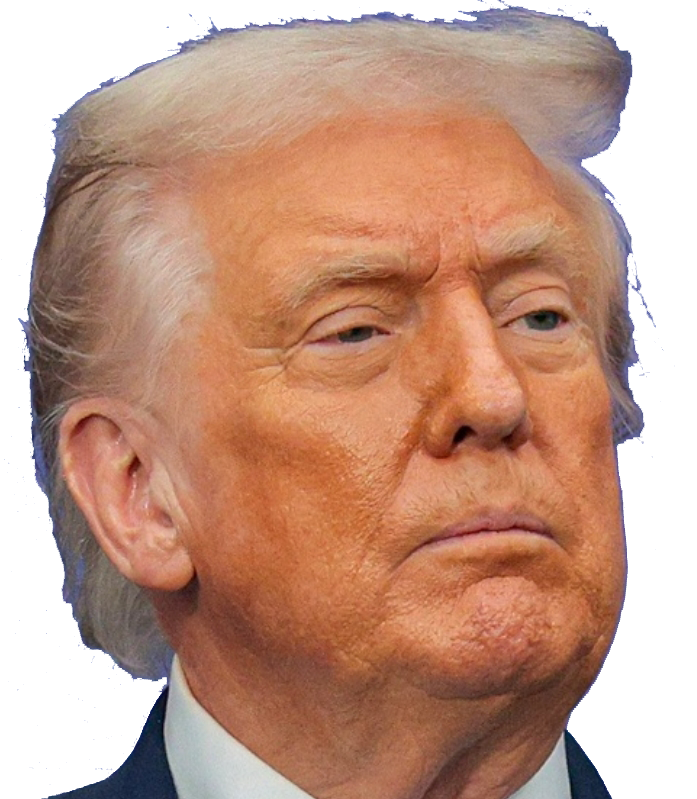
Trump’s disdain for international law and the United Nations, and repeated assertions from both him and White House officials that the US will not rule out using military force to take Greenland, are a further warning for the future of the international legal order.
Now is not the time for silence. Australia needs to stand up and make its position clear in support of international law.
-
Donald Rothwell is professor of international law at the Australian National University