
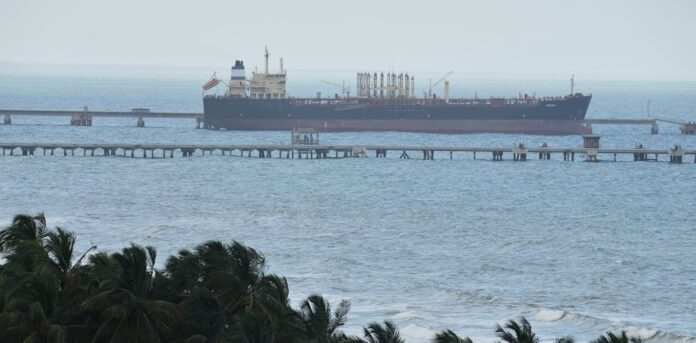

Following Nicolás Maduro’s capture in Caracas by United States military forces, active planning for political transition in Venezuela has intensified in Washington, D.C.
For the U.S., the prize is the prospect of reviving one of the world’s largest proven oil reserves and reshaping global energy markets in its favour.
But the ripple effects would extend well beyond Caracas and the U.S. A Venezuelan oil revival could also subtly increase American leverage over Canada — particularly Alberta — through its impact on oil prices, investment flows and longstanding debates about Canada’s energy future.
At first glance, this may seem counterintuitive. Canada is traditionally a close American ally and its largest foreign oil supplier. Yet Canada and Venezuela largely compete in the same heavy-oil regional and global markets, and shifts in supply from Canada to Venezuela would widely reverberate across the Canadian economy and political landscape.
Heavy crude, lower prices and U.S. refineries
If U.S. sanctions on Venezuela are lifted and the country’s oil sector is partially revived, even a modest increase in production could have outsized effects on prices — especially for heavy crude. American Gulf Coast refineries are specifically configured to process heavy crude, historically sourced from Venezuela, Mexico and Canada’s oilsands.
More Venezuelan barrels on the market would increase competition for these refineries and possibly those in the American Midwest. This could push down the price premium currently enjoyed by Canadian heavy crude, such as Western Canadian Select.
For U.S. refiners, cheaper crude is good news. For Canadian producers, it could squeeze margins already vulnerable to global price volatility and high production costs.
In this sense, Venezuela’s return would not simply add supply; it would challenge Canada’s niche in the U.S. oil import market.
Investment trade-offs and the oilsands dilemma
Oil markets are not just about barrels — they’re about capital. Investors make choices about where to place long-term bets, and those choices are increasingly shaped by climate policies, energy transition expectations and geopolitical risk.
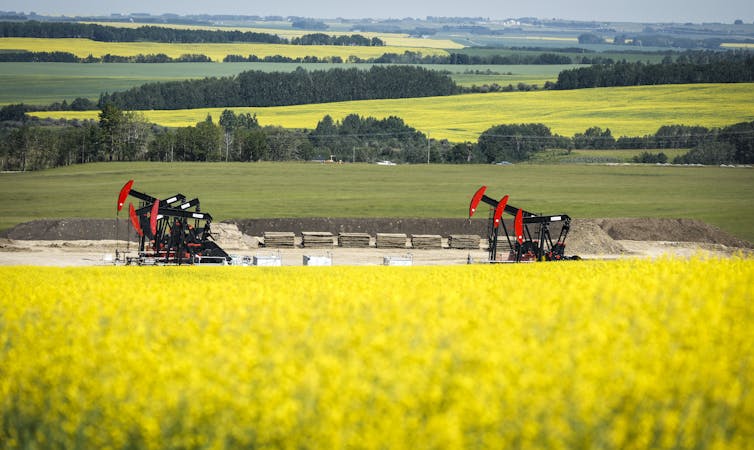
A perceived opening in Venezuela could redirect some international investments away from Alberta’s oilsands. Even if Venezuela remains risky, the idea of accessing vast reserves at lower costs may appeal to investors looking for short-term gains in a declining oil market.
This shift could further undermine already fragile (and climate-threatening) prospects for new oilsands expansion and make additional pipeline projects to Canada’s West Coast even harder to justify.
If global capital sees fewer long-term returns in high-cost, high-carbon oil, Alberta may find itself competing not just with renewables, but with other oil producers closer to U.S. markets. This could play in favour of an additional pipeline to Canada’s West Coast to reach China, which may not see so many shipments from Venezuela, especially if the U.S. pressures Caracas to privilege its own market and companies.
Economic pressure and the politics of separatism
Weaker oil revenues could also reshape Alberta politics. Much of the province’s separatist rhetoric has historically rested on the idea that Ottawa “takes” Alberta’s oil wealth through federal transfers and environmental regulations.
If oil revenues decline structurally due to lower prices and reduced investment, the economic foundation of this grievance weakens. A less oil-dependent Alberta may have fewer material incentives to push for sovereignty, even if political frustrations remain.
This doesn’t mean discontent would disappear. But it suggests that long-term changes in global energy markets could quietly reduce the appeal of resource-based nationalism in Canada’s West.
The urgent case for diversification
For Alberta and Canada more broadly, the lesson is clear: economic diversification is no longer optional; it’s an urgent necessity. Betting on sustained high oil prices has always been risky; betting on them in a world of messy energy transition is increasingly untenable.
This means doubling down on alternative export revenues, from clean technologies and critical minerals to advanced manufacturing, agri-food and knowledge-based services. It also means investing in workforce transitions, regional innovation and infrastructure that supports economic resilience beyond oil.
The prospect of Venezuela’s return to oil markets underscores why Canada cannot rely indefinitely on being the “safe” oil supplier to the United States.
A Venezuelan oil boom remains unlikely
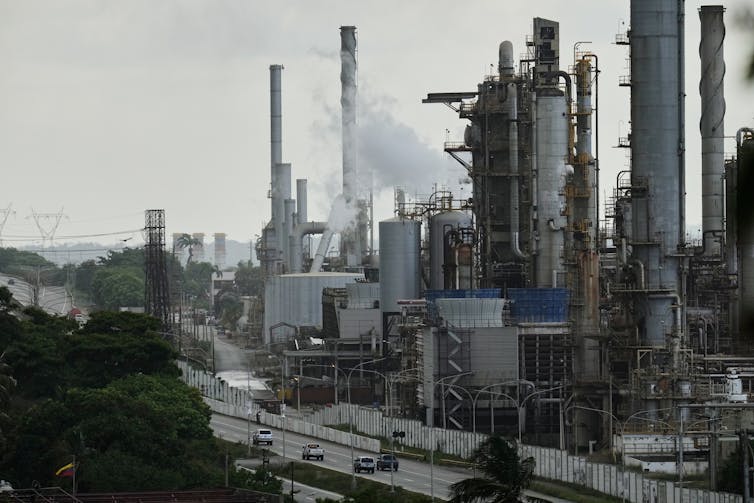
All of this, however, rests on a big “if.” A rapid and large-scale revival of Venezuela’s oil sector is improbable. Years of mismanagement, underinvestment and sanctions have left infrastructure in poor condition.
Production costs are high, oil quality is low and the carbon footprint of Venezuelan heavy crude is significant, a growing liability in a carbon-constrained world.
What’s more, U.S. oil company interests don’t always align with American energy security and geopolitical policy objectives, and expectations of an oil surplus in the coming decades dampen enthusiasm for massive new investments.
Political uncertainty remains acute, and even American firms like Chevron operate under fragile arrangements that could be reversed. Though it’s unlikely, a more revolutionary, post-American intervention government in Venezuela might even seek retribution against the U.S. and other foreign companies seen as complicit in past pressure campaigns.
In short, Venezuela’s oil is vast, but monetizing it at scale is another matter.
Lessons from past regime change efforts
History offers sobering lessons about past efforts to bring about regime change.
In Iraq, Iran and Libya, attempts to reshape energy sectors through regime change or coercive pressure often backfired. Production disruptions, political instability and nationalist backlash frequently undermined both investor confidence and geopolitical objectives.
There are some reasons to assume Venezuela would be different, including ongoing negotiations between U.S. President Donald Trump’s administration and the regime in Caracas, limited economic and military options for the former Maduro regime and a growing consensus among major powers that they can gain from a return to imperialist “spheres of influence.”
But energy markets reward stability more than ideology, and regime change rarely delivers it quickly.
Who else loses from lower oil prices?
Finally, it’s worth noting that lower oil prices would not hurt Canada alone. In the U.S., the first casualties would likely be some oil producers, particularly smaller shale firms with high debt and thin margins. While a few large American oil companies might benefit from cheaper acquisitions and refinery gains through access to cheaper Venezuelan supply, many smaller U.S. producers could suffer.
This complicates the notion that the U.S. would unambiguously “win” in the event of a Venezuelan oil revival. Energy geopolitics creates winners and losers on all sides.
In the end, Venezuela’s political future may matter less for Canada because of what happens in Caracas and more because it highlights a deeper reality: oil no longer offers the geopolitical and fiscal certainty it once did. For Canada, adapting to that reality, rather than betting against it, may be the most strategic move of all.