
Who was the last politician you listened to for any length of time? Perhaps it was Andy Burnham or Zack Polanski. Or maybe it was Wes Streeting, Nigel Farage or Zarah Sultana. Perhaps your dark secret is that it was Donald Trump.
One thing these politicians have in common is that they are all unusually good communicators. From Farage’s drawling provocations to Polanski’s pithy directness, Sultana’s concentrated blasts of outrage to Trump’s mesmerising ramblings, they compel you to listen. The completely forgettable passages that voters across western democracies have associated with political speech for decades are largely absent.
In some ways, the return of rhetoric as a hugely advantageous political skill feels like a liberation. Nowadays, it’s true, this skill is often deployed in simpler, cruder ways than in the past: in quick, conversational interventions or digressive public statements and question-and-answer sessions, rather than expertly structured formal speeches. Even if Farage becomes the most iconoclastic prime minister since Margaret Thatcher, it is doubtful that his key utterances will be as anthologised and remembered as hers.
Yet for anybody who believes that much of politics is unavoidably about conflict, clashing interests and worldviews, and the arousing and articulation of public emotions, the rise of the compelling communicators is hard to resist. Their often dramatic and populist messages are replacing a worn-out discourse.
In Britain and other rich democracies for much of the 1990s, 2000s and 2010s, mainstream political speech became ever more inward-looking and impenetrable: stiff with jargon such as “stakeholders”, “social cohesion” and “the third way”. This language essentially said to voters that politics and government were about complex technical questions that could and should be left to insiders. Politicians still regularly addressed the public, but rarely in an accessible enough way to suggest that they wanted voters to truly understand what they had to say.
As long as western economies provided the majority with relatively prosperous and improving lives, many voters were not that bothered about being excluded from the political conversation. But the 2008 financial crisis and subsequent wage stagnation and the cost of living crisis ended that semi-contented apathy. The public appetite for frank politicians, which had never completely gone away – as was shown in Britain by the enduring popularity of vivid communicators such as Tony Benn – started to grow again, until it became a hunger so powerful that politics changed to sate it.
Wider social, cultural and technological shifts have added to the value of clear political communication. The decline of deference and formal manners, and the creation of uninhibited digital spaces and networks, have given us a world of outrageous YouTubers and indiscreet voice notes, unbuttoned podcasts and confessional pop songs with the vocals mixed so high that you can hear the singer breathing. Against the backdrop of all this intimate – or intimate-seeming – public communication, a typically formal Keir Starmer speech or statement, while appropriate for delicate foreign policy work such as his trip to China, in a domestic context sounds almost as out of date and incomprehensible to many voters as a politician from the 1950s.
Many of his problems as party leader and prime minister are really about communication, and the belief that Burnham or Streeting or Angela Rayner would do it much better. As well as being more natural-sounding public speakers – more colloquial and at ease with cultural references – all three sometimes make being a politician actually look enjoyable: Rayner smiling as she bashes the Tories, Streeting plotting with relish, or Burnham enthusing about the transformation of Greater Manchester’s public transport. By contrast, Starmer’s talk of doing his “duty” in a “government of service” weighs voters down, sounding too much like the grind of their own lives. Political communication is often about personifying the right mood.
And yet, appearing to embody some form of welcome change and presenting ideas and policies in appealing ways are hardly the whole of politics. There are also tasks that need to be carried out less publicly: drawing up policies and strategies, undermining rivals and other parties, and making sure that your government’s plans are actually carried out. One danger of the sometimes exhilarating overthrow of technocratic politics is that democracies end up with a politics that is mostly just talk, while less performative but vital aspects of government and opposition are neglected.
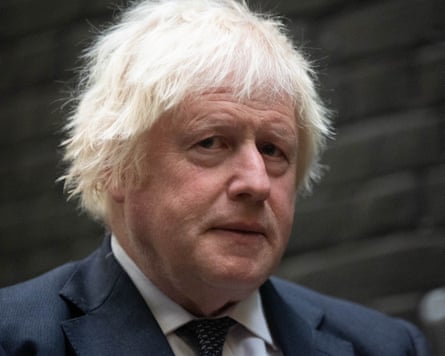
Boris Johnson’s terrible premiership has already given Britain a taste of government by little but rhetoric. But the speed with which voters have tired of Starmer’s more conscientious administration suggests that many would prefer not to think about how much repair work Britain actually needs. Technocrats such as Starmer wrongly assume that governments don’t need to explain and justify themselves in direct, resonant ways. Yet they are right that not everything a government does can be articulated in colourful, straightforward terms, as populists often claim.
Could our more conventional, cautious politicians adapt to the new communications age? Some are trying. This week, Starmer announced the government’s new policy capping ground rents for leaseholders – a typically worthwhile but hard to dramatise reform – on TikTok. Walking stiffly towards the camera, making too many clenched- rather than open-hand gestures, he concluded with a repetitive sentence that suggested he didn’t quite trust himself to be clear, or clearly understood: “This is a promise that we said we’d deliver, and I’m really pleased that we’re delivering on that promise.” After years of self-control and careful language, it’s probably too late for him and his most guarded ministers to loosen up in public now.
As with generations of western centrists, Starmer’s communications style has been shaped by the assumption that powerful conservative interests – big business, financial markets, rightwing journalists and voters – must be offended as little as possible. That approach served leaders such as Tony Blair well, at least in electoral terms. But that was a long time ago. Nowadays, however much Starmer plays down his more leftwing policies and emphasises his patriotic, pro-business or authoritarian credentials, conservatives hate him anyway. Such is our more polarised world. Meanwhile, populists of both left and right say supposedly taboo things to voters – and soar in the polls.
It’s time for the government to speak differently. That won’t necessarily save it, so numerous are its enemies and problems. But at least Labour will be back in the conversation.
-
Andy Beckett is a Guardian columnist