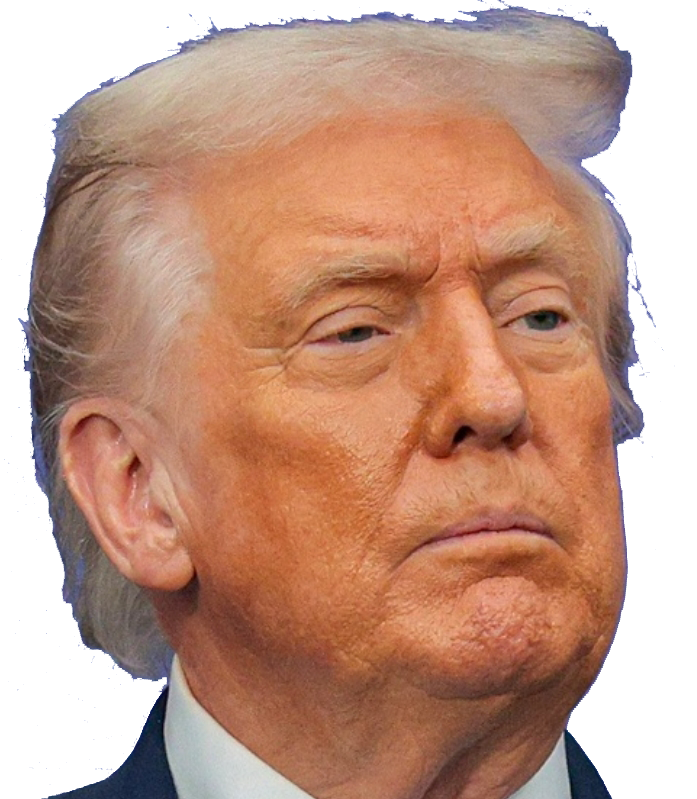


Keir Starmer has played down the prospect of retaliatory tariffs on the US, after Donald Trump threatened to impose fresh levies against Nato allies if a deal over Greenland is not reached.
The prime minister said US tariffs would damage the British economy and were “in no one’s interests”, despite growing pressure domestically to take a more forceful response. The UK would prefer a “calm discussion” with allies, he added.
However, Downing Street sources suggested Starmer was not yet at the stage of ruling out tariffs completely, and would assess the situation as it developed.
The UK government is preparing for the possibility of a taxpayer-funded support package to try to shield British businesses in the event that the US pushes ahead with its threats next month.
At an emergency press conference on Monday morning, Starmer told reporters: “Threatening tariffs on allies is the wrong thing to do, completely wrong … A tariff war isn’t in anybody’s interests.
“Therefore what I want to do is to avoid a tariff war, because it will be businesses, workers and families across the country that will be hit by a trade war.”
Asked directly whether he would impose tariffs in return, he added: “We have not got to that stage, and my focus therefore is making sure we don’t get to that stage.”
Starmer said he was determined to find a “pragmatic, sensible and sustained” route through the row, adding: “I don’t want to lose sight of the central goal here, which is to avoid the seriousness that a trade war would bring.”
The business secretary, Peter Kyle, told Channel 4 News he had already spoken to Jaguar Land Rover about the tariff threats. “I am always open to conversation about how we can support them – support them in their hour of need, support them when they have opportunities,” he said.
Trump has shown no sign of backing down from his bombshell threats at the weekend to hit the UK and seven other European countries with a 10% levy on goods exports from 1 February, rising to 25% by June.
In a telephone interview with NBC on Monday, the US president declined to comment on whether he would rule out seizing Greenland by force, insisting he would “100%” push ahead with his tariff plans.
In an extraordinary text message sent on Sunday to the Norwegian prime minister, Jonas Gahr Støre, he suggested his threat was partly down to being snubbed for the Nobel peace prize.
Despite Trump’s belligerent rhetoric, Starmer said he did not think the US president was genuinely considering taking military action in Greenland. “I think that this can be resolved, and should be resolved, through calm discussion,” he added.
Answering questions after his brief speech, the prime minister repeatedly stressed what he said was the vital importance of US cooperation in areas such as intelligence and the nuclear deterrent, as well as on Ukraine.
“The last thing that we should do is to simply throw all that away and pretend that it doesn’t matter any more. It does matter, but we don’t do that by pretending we haven’t got differences,” he said.
No 10 is keeping a close eye on public opinion, recognising that many people would prefer the prime minister to move on from his serious, pragmatic approach towards Trump’s increasingly erratic outbursts.
The Liberal Democrat leader, Ed Davey, urged the government to change course as Trump was acting like an “international gangster” over Greenland. Senior Conservative MP Simon Hoare said it was time for the government to “fight fire with fire”.
A YouGov poll on Monday found that two-thirds of Britons would support placing tariffs on American goods imported to the UK if Trump delivers on his threat.
Starmer defended his diplomatic approach to Trump, but suggested he did understand why Britons might see attempts to cooperate with Trump as pointless.
“Alliances endure because they’re built on respect and partnership, not pressure,” he said. “Strong, respectful alliances require the maturity to say where we disagree, and on this we disagree, and I’ve been clear about that.
“I completely understand why what President Trump said about tariffs over the weekend has been so badly received in this country.”
Yvette Cooper, the foreign secretary, told MPs later the threat of tariffs against allies in this way was completely wrong. “It is unwarranted and it is counter-productive,” she added.
“Instead of divisions that only aid our adversaries, we now need a serious and constructive dialogue about our Arctic security,” she said. “Both sides of the Atlantic should be working together on Arctic security, not moving apart.”